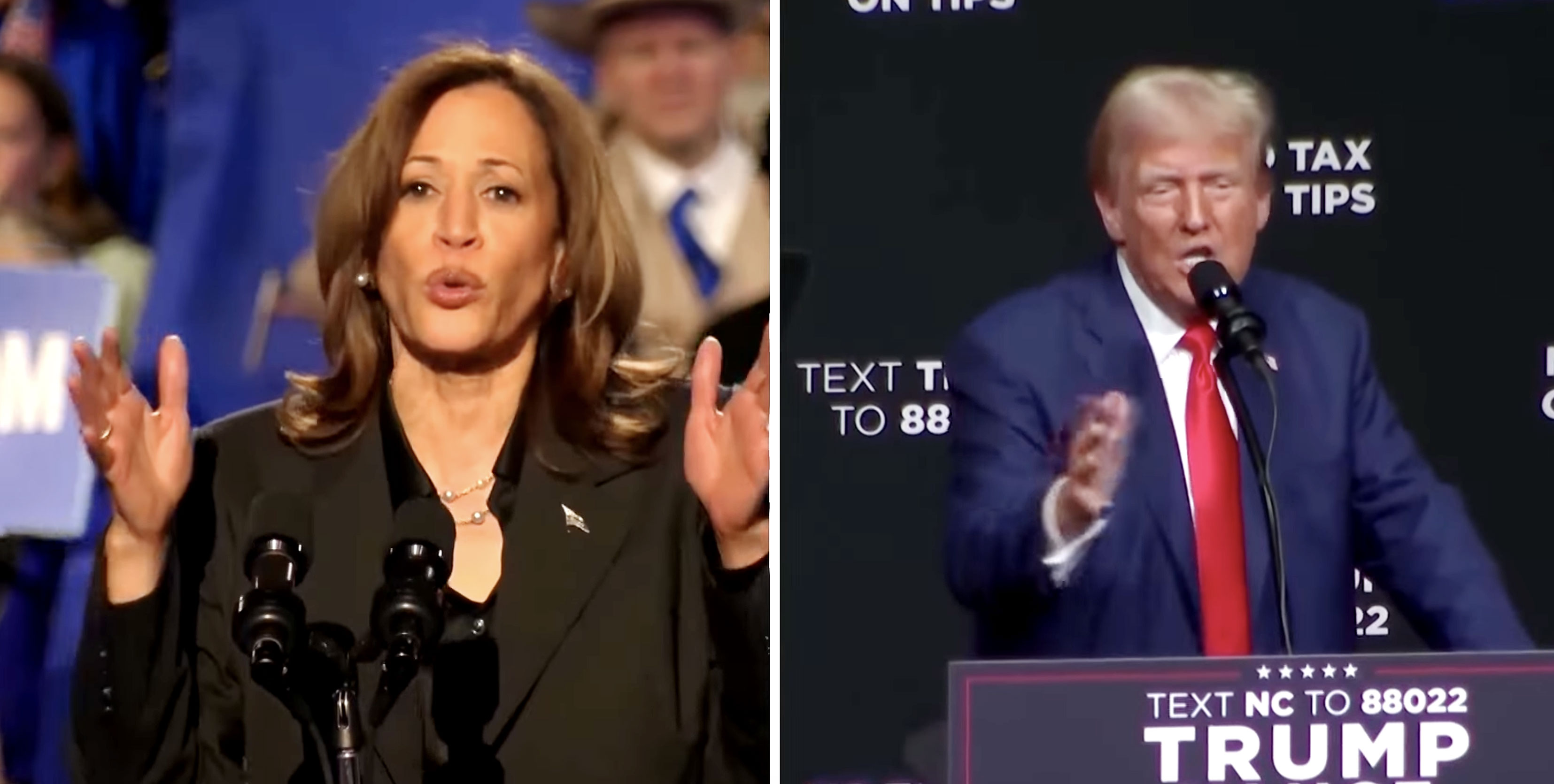
Don’t you just love advertising in presidential election years? Aggressive, repetitive, and often un-creative ads in every commercial pod, whether you’re watching football, soap operas, or game shows. ‘Tis the season to be mud-slinging.
In the general election, The New York Times has reported that more than $500 million will be spent by the Harris and Trump campaigns, and that the Super PAC supporting Harris will pour $187 million into television and radio alone in the final 49 days. I’m not great at math, but that’s almost $4 million PER DAY from September 17th through November 5th. That’s not counting digital, social, texting, robo-calls, and whatever else each campaign’s AI-driven algorithms are cooking up.
But what about the ads themselves? Is there any tangible messaging going on beyond the “don’t vote for the other team, because they’re terrible” tropes? Sadly, not much.
The Trump campaign has struck gold with one spot called “They/Them” that’s running ad nauseam across cable networks, which focuses on a (decontextualized) message about Harris supporting gender reassignment in prisons, with the implication that American taxpayers are footing the bill. It ends with the line, “Kamala’s agenda is they/them. Not you.” However you feel about the issue and the message, (and the malevolent editing,) you gotta admit that’s a darn strong line to punctuate the spot. It’s creative and pithy, and rings a potent dog whistle for conservatives who bristle at all things trans.
Harris fires back with a spot focused on Trump and his anti-abortion influence, and his implicit ties to the mercurial Project 2025. The spot is called “Who He Is,” and is (again) focused on her opponent, and his previous (and likely future) inclinations as it relates to national policy. The compelling aspect of this spot is that none of it is conjecture – Harris is highlighting actual changes that were affected during Trump’s actual presidency. It invites the viewer to draw their own conclusion (and the creative directors are betting on this,) that “if he did it before, he’ll do it again.”
So, what’s wrong with this advertising? Some would argue that the ads are fine, claim “that’s just what they do,” and that politics simply brings out the worst in strategists and creative directors. Hey, it’s a limited run, so attack, attack, attack, and it’s definitely rated R for rubbing just about everyone the wrong way.
But that isn’t the way most brands compete, is it? Most brands want to use the precious time they have with the consumer to connect to something positive, and special, and DIFFERENT about that brand. Most brands want to say good things (about themselves,) and let the consumer draw their preferences from there. Geico, as an almost on-par example, (they spend almost $3 million per day in advertising year-round,) doesn’t spend their time shitting on Allstate or State Farm. They use that time and all that money to drill simple, memorable messages into consumers’ minds: 15 minutes could save you 15% or more; so easy a Caveman could do it; etc.
Some strategists argue that you should NEVER mention your competition in your ads, because you’re essentially using YOUR media budget to promote THEM (to some degree.) Tell that to Coke v. Pepsi, or McDonald’s v. Burger King, or Apple v. PC. There are exceptions to every rule.
But marketing IS a conversation, and a campaign is an extended conversation that happens in short spurts over long periods of time. Brands use 15 or 30 or 60 seconds to get you to think something, believe something, and maybe even to do something over the course of several months or more. If they spend all their time talking about the other brands, what would you think about them? And more importantly, would you think about them at all?
That’s what’s disappointing about this unprecedented time in marketing history. The most money ever spent on presidential campaign advertising, and all we’re doing is rejecting the rules that all of us are taught about advertising, especially about being memorable, and about never misleading your audience.
I think we can do better. And I’m looking forward to November 6th, when we can go back to talking lizards, bunnies banging drums, and people getting their hands stuck inside potato chip containers. Ain’t advertising great?
 Marketing Thingy