You want good* advertising? You won’t find it in the election media blitz.

Don’t you just love advertising in presidential election years? Aggressive, repetitive, and often un-creative ads in every commercial pod, whether you’re watching football, soap operas, or game shows. ‘Tis the season to be mud-slinging.

In the general election, The New York Times has reported that more than $500 million will be spent by the Harris and Trump campaigns, and that the Super PAC supporting Harris will pour $187 million into television and radio alone in the final 49 days. I’m not great at math, but that’s almost $4 million PER DAY from September 17th through November 5th. That’s not counting digital, social, texting, robo-calls, and whatever else each campaign’s AI-driven algorithms are cooking up.

But what about the ads themselves? Is there any tangible messaging going on beyond the “don’t vote for the other team, because they’re terrible” tropes? Sadly, not much.

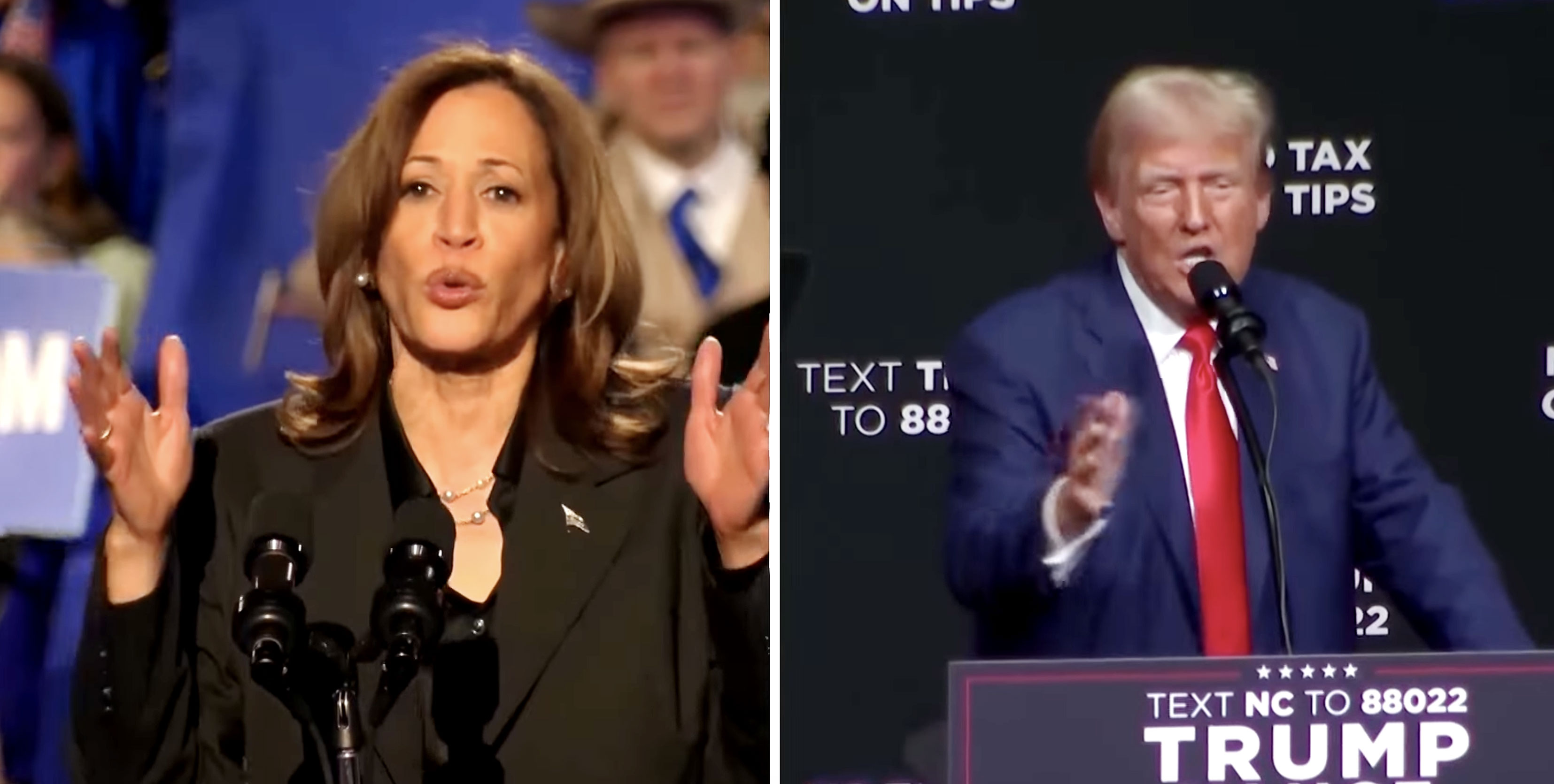
The Trump campaign has struck gold with one spot called “They/Them” that’s running ad nauseam across cable networks, which focuses on a (decontextualized) message about Harris supporting gender reassignment in prisons, with the implication that American taxpayers are footing the bill. It ends with the line, “Kamala’s agenda is they/them. Not you.” However you feel about the issue and the message, (and the malevolent editing,) you gotta admit that’s a darn strong line to punctuate the spot. It’s creative and pithy, and rings a potent dog whistle for conservatives who bristle at all things trans.

Harris fires back with a spot focused on Trump and his anti-abortion influence, and his implicit ties to the mercurial Project 2025. The spot is called “Who He Is,” and is (again) focused on her opponent, and his previous (and likely future) inclinations as it relates to national policy.  The compelling aspect of this spot is that none of it is conjecture – Harris is highlighting actual changes that were affected during Trump’s actual presidency. It invites the viewer to draw their own conclusion (and the creative directors are betting on this,) that “if he did it before, he’ll do it again.”

So, what’s wrong with this advertising? Some would argue that the ads are fine, claim “that’s just what they do,” and that politics simply brings out the worst in strategists and creative directors. Hey, it’s a limited run, so attack, attack, attack, and it’s definitely rated R for rubbing just about everyone the wrong way.

But that isn’t the way most brands compete, is it? Most brands want to use the precious time they have with the consumer to connect to something positive, and special, and DIFFERENT about that brand. Most brands want to say good things (about themselves,) and let the consumer draw their preferences from there. Geico, as an almost on-par example, (they spend almost $3 million per day in advertising year-round,) doesn’t spend their time shitting on Allstate or State Farm. They use that time and all that money to drill simple, memorable messages into consumers’ minds: 15 minutes could save you 15% or more; so easy a Caveman could do it; etc.

Some strategists argue that you should NEVER mention your competition in your ads, because you’re essentially using YOUR media budget to promote THEM (to some degree.) Tell that to Coke v. Pepsi, or McDonald’s v. Burger King, or Apple v. PC. There are exceptions to every rule.

But marketing IS a conversation, and a campaign is an extended conversation that happens in short spurts over long periods of time. Brands use 15 or 30 or 60 seconds to get you to think something, believe something, and maybe even to do something over the course of several months or more. If they spend all their time talking about the other brands, what would you think about them? And more importantly, would you think about them at all?

That’s what’s disappointing about this unprecedented time in marketing history. The most money ever spent on presidential campaign advertising, and all we’re doing is rejecting the rules that all of us are taught about advertising, especially about being memorable, and about never misleading your audience.

I think we can do better. And I’m looking forward to November 6th, when we can go back to talking lizards, bunnies banging drums, and people getting their hands stuck inside potato chip containers. Ain’t advertising great?
TRUMP: the brand that never was

trump_logo_1

In her recent article in the Washington Post, Jennifer Rubin writes an impassioned article about how, in the “Irony of Ironies,” Trump has destroyed his own brand right in the middle of perhaps the most popular and most saturated stretch of his career. She’s kind of pissed.

I agree with this article on only one point: that Donald Trump likely entered the presidential race as a publicity stunt, something I’ve been crowing about for more than a year. My guess is that he thought he had no shot at winning, but would gain widespread popularity during the primaries – and leverage that popularity to launch a newer, bigger, huger reality show about something or other.

However, that’s about all we agree on, and likely because Ms. Rubin and I have very different ideas of what “brand” actually means.

Donald Trump built – literally and figuratively – his name on real estate development. That was his bread and butter, and (aside from a little head start from his father,) how he made, and lost, and made, his enormous fortunes. He put the Trump name name on every building, every hotel and every DBA he launched.

He then (pretty successfully) associated that name “TRUMP” with wealth and opulence. The gold finishing on all the buildings. The gawdy furnishings in the hotels. The “you-can’t-afford-it” pricing. And the brand actually stood on something fairly cohesive in its earliest form. This was a real estate/building/developing/fancy-finished kind of brand. Even when TRUMP extended the line into other types of properties, like resorts, and casinos, and golf courses, and a skating rink, it kinda sorta held together. (After all, those are all developed and built on property.)

Pretty straightforward. And for those who wanted to associate with that big-money, big-ego promise, the brand was there for the hefty asking price. And it commanded a limited, but interestingly dedicated, audience.

But then TRUMP derailed. It made the classic hubris mistake of any brand that thinks it’s soooo good at one thing, that it can be equally good at lots of other things.

He extended the brand.

And from there, the TRUMP brand got hazy, and extended into a weird and wide array of categories. Through the years, the TRUMP name has appeared on a host of enterprises:

A winery.
A beauty pageant.
A mortgage company (okay, that might be sort of adjacent.)
The oft-vilified university.
Clothing.
Fragrances.

(Should I keep going?)

Okay.

An airline.
A vodka.
A model management company.
A steakhouse – later extended to online steak delivery.
A catering company.
(And I’m leaving out a bunch.)

As it turns out, almost all of those ventures have failed, some more magnificently than others. And the reason was, in almost all cases where the concern was dependent upon consumer interaction, the price point (always set at the ultra premium level) did not consistently match what was delivered.

Which, itself, is the rub. The “promise,” the central pillar of the TRUMP brand was that you’d PAY a lot to interact with it. But time and time again, with greater frequency than we might care to agree on, the quality and commitment to excellence delivered to the consumer was not commensurate with the price commanded.

Which proves that the TRUMP “brand” is only a brand in that those five capital letters are emblazoned on just about everything the organization has ever produced. But not a delivery against his core promise.  (We assume, as consumers, to GET a lot when we PAY a lot.)  Instead, the sum of all the experiences in all the categories over all the years is this: the TRUMP brand is extremely shiny and impressive on the surface, and anywhere from meh to virtually invisible right after your platinum credit card transaction goes through.

Which means, and I say this quite politely to Ms. Rubin, that Mr. Trump’s behavior in recent months hasn’t done anything to “damage” the TRUMP brand. Because the brand is a disembodied disaster in pure marketing terms. (Let’s not confuse the TRUMP brand with Donald’s celebrity persona…if his celebrity persona is the brand, then he’s trending like mad and gaining in popularity.)

The TRUMP brand’s only verifiable track record has been to over promise and under deliver on matters of substance in all the categories outside of real estate properties. It has done that quite consistently for decades. And in light of its founder’s recent press, it’s continuing magnificently. Terrific. Huge. Tremendous.