In case you’ve been away on Mars for summer vacation, Cracker Barrel announced a rebrand, social media erupted, Trump tweeted, and within days they reversed course and went back to their old logo. But here’s the spoiler: this was never really about a logo. It was about who controlled the story.
Okay. Now you’re caught up. How was Mars?
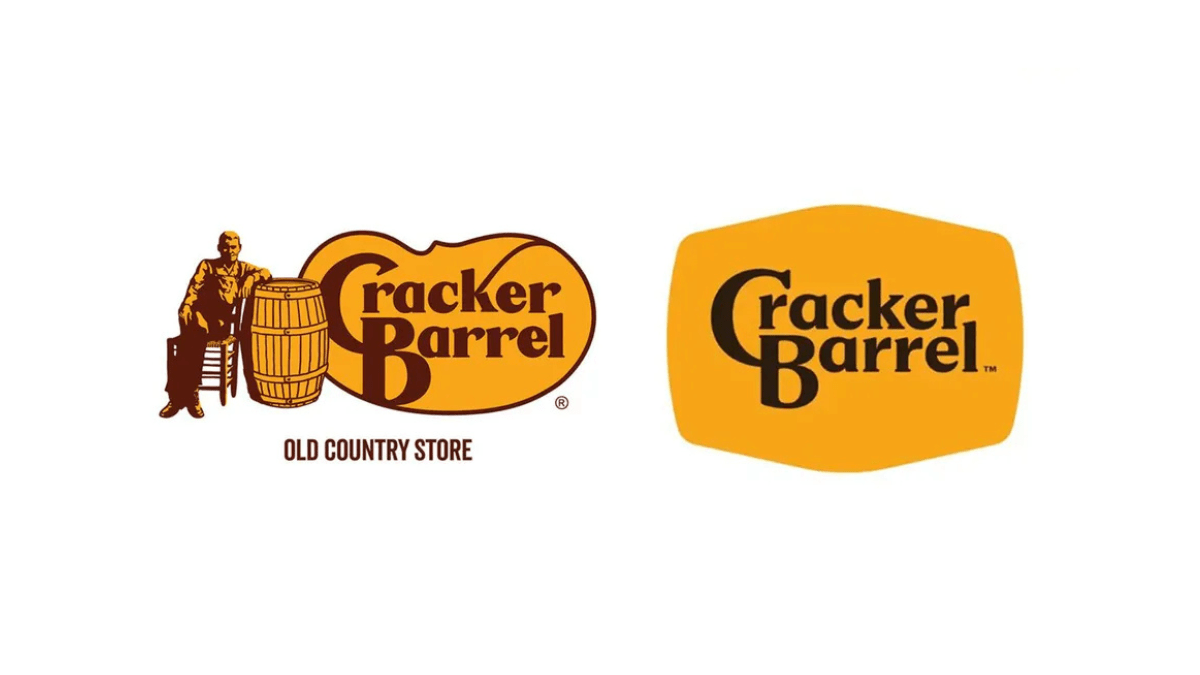
First things first: let’s not romanticize the old Cracker Barrel logo. We can all agree that thing was crap. Overly fussy, hard to reproduce at small scale, and more nostalgia than any semblance of valuable visual communication. It screamed 1970s “down-home” branding, which is exactly when it was born. The barrel-and-guy part was never sacred. Losing him wasn’t tossing a Picasso into a garbage can, it was shedding a dated illustration that had long outlived its usefulness.
The new logo? From a purely graphic standpoint? Decidedly better. Cleaner. Contextual. Legible in digital environments. A mark you can actually scale to an app icon without losing the plot. Any competent designer will tell you it was an upgrade. And yet here we are, watching the company scramble back to Uncle Herschel after a week of torches and pitchforks from the social media mob. “REDOS WILL NOT REPLACE US.”
Here’s the thing most people—including, notably, the president—missed: the logo was just one element of a much broader brand storyboard. A great new color palette. Revised typography. Shapes that make sense, including the central-focus barrel outline. Cracker Barrel’s leadership wasn’t trying to erase “heritage.” They were trying to refresh a rickety old brand with a comprehensive strategy aimed at the next two decades or so. This included remodeled restaurants, a reworked menu, more efficient kitchens, and a retail rethink that included some pretty nifty new packaging. They wrapped it all in a central theme called “All the More.” They weren’t just drawing a new wordmark; they were attempting a strategic modernization across the board.

And the strategy surrounding this brand refresh was sound. Cracker Barrel’s real problem wasn’t just an outdated logo…it’s an aging customer base. Julie Felss Masino, the CEO, even said it out loud on Good Morning America: “Cracker Barrel needs to feel like the place they (their audience) want to be today, and tomorrow.” The backlash to the logo redesign, of course, is all about holding on to yesterday.
The heavy blowback wasn’t about typography or colors or shapes—it was about identity politics. For some, any change to anything in America equals “woke.” For others, evolution is just common sense. The logo became a proxy fight in America’s culture war, which is ridiculous but inevitable in 2025.
And here’s the rub: no matter what side you’re on, Cracker Barrel comes out on top. For two weeks, the entire country was talking about Cracker Barrel. Lead segments on national news programs. Graphic designers guesting on CNN. Let me repeat that: Cracker Barrel. A brand that hasn’t been relevant in a national conversation since, well, ever. As I wrote in a recent post: the conversation is the campaign. Millions of people who hadn’t thought about hashbrown casserole in years suddenly had strong opinions about a roadside chain’s logo. That’s brand oxygen you can’t buy.
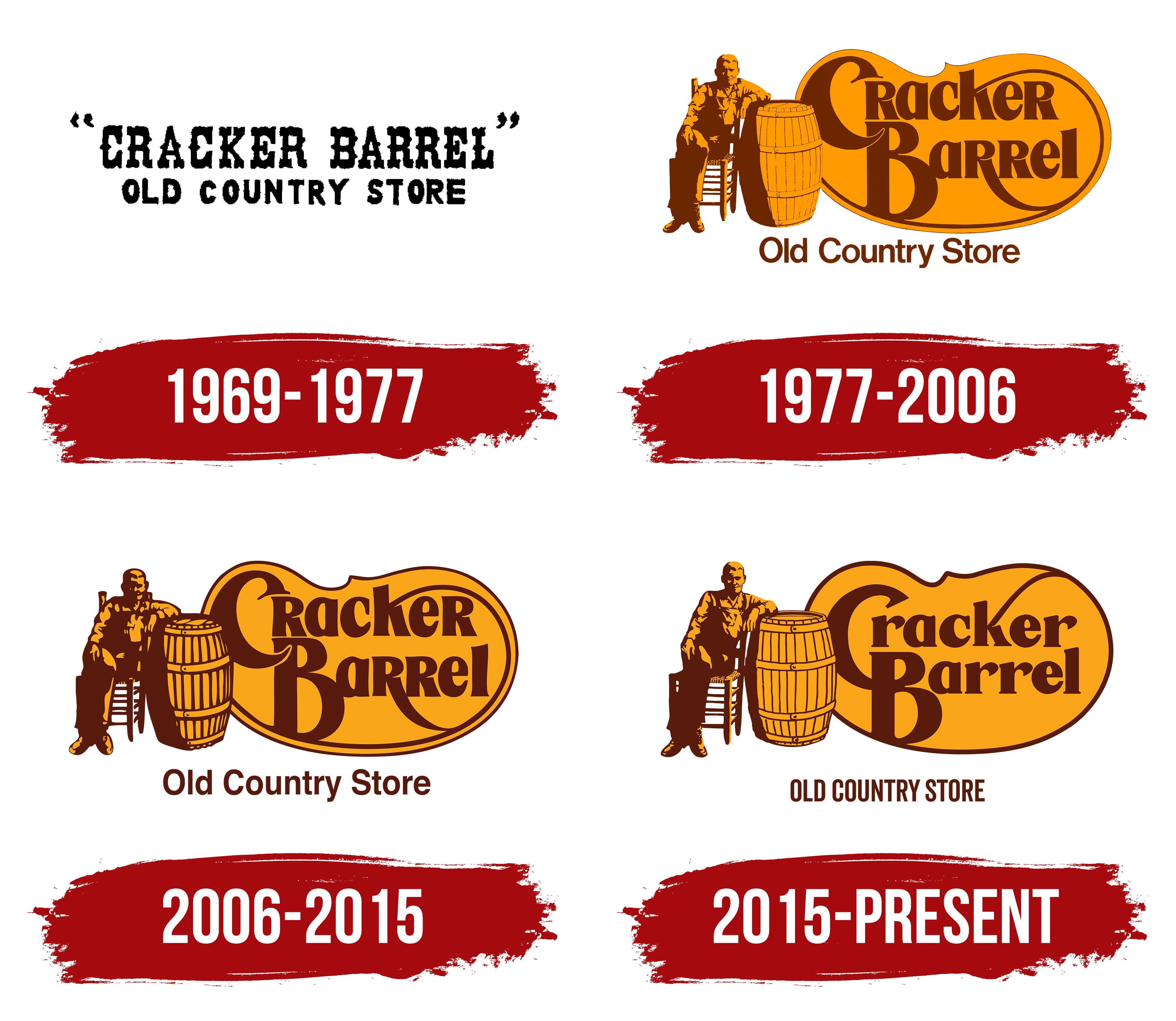
Let’s also not forget that this was not the first time the Cracker Barrel logo has been updated. It’s gone through multiple tweaks across its 50+ year history. Brands evolve their marks based on strategic direction, but also on design trends and the zeitgeist. Burger King did. Pringles did. Pepsi has done it enough times you could write a doctoral thesis on their logo alone. Logos aren’t museum pieces; they’re tools that adapt to the times, the mediums, the audiences, and the brand strategy.
So, what actually is the Cracker Barrel brand? Here’s the core: folksy and casual roadside restaurants, easy to find off the interstate. They serve good, abundant food quickly, at a reasonable price, wrapped in a veneer of “Americana” hospitality. The real differentiators are iconic: the country store you pass through, the rocking chairs out front, and that peg game on every table that challenges your executive functions before your cornbread arrives. None of that has changed. The identity and experiences and memories that actually create the Cracker Barrel brand remain untouched.
So let’s get to the real lesson here. Cracker Barrel’s problem wasn’t that the new logo was good or bad or different. The problem was that the storytelling around its release got hijacked by everyone with a social media account. Everything else – the nostalgia equity, the politics, the stock prices – those were just symptoms. And because of those symptoms, they caved to the noise with a wimpy “we listened” statement just days later.
Cracker Barrel let themselves get dragged into a culture war, and they blinked. Brands should evolve. They must evolve. But evolution requires courage and clarity of communication. Without it, you wind up explaining why Uncle Herschel is back on the porch in your crappy old logo. And here’s a billion-dollar question: now that you’ve reverted back to the old logo, are you stuck with it forever? Will there EVER be a time when updating it is appropriate? 2026? 2030? As it relates to evolving in ANY way, the company has made it increasingly difficult for itself with this slippery precedent.
For the record, I think reverting to the old logo was a mistake. It ceded the narrative to the loudest voices and undercut the logic of the broader strategy. Now the 21st-century brand experience is saddled with a 1970s logo. That mismatch doesn’t just look awkward—it confuses customers. And confusion at the brand level eventually shows up where it hurts: at the cash register.
 Marketing Thingy