Cracker Barrel and the logo fiasco: the real lesson.

In case you’ve been away on Mars for summer vacation, Cracker Barrel announced a rebrand, social media erupted, Trump tweeted, and within days they reversed course and went back to their old logo. But here’s the spoiler: this was never really about a logo. It was about who controlled the story.

Okay. Now you’re caught up. How was Mars?

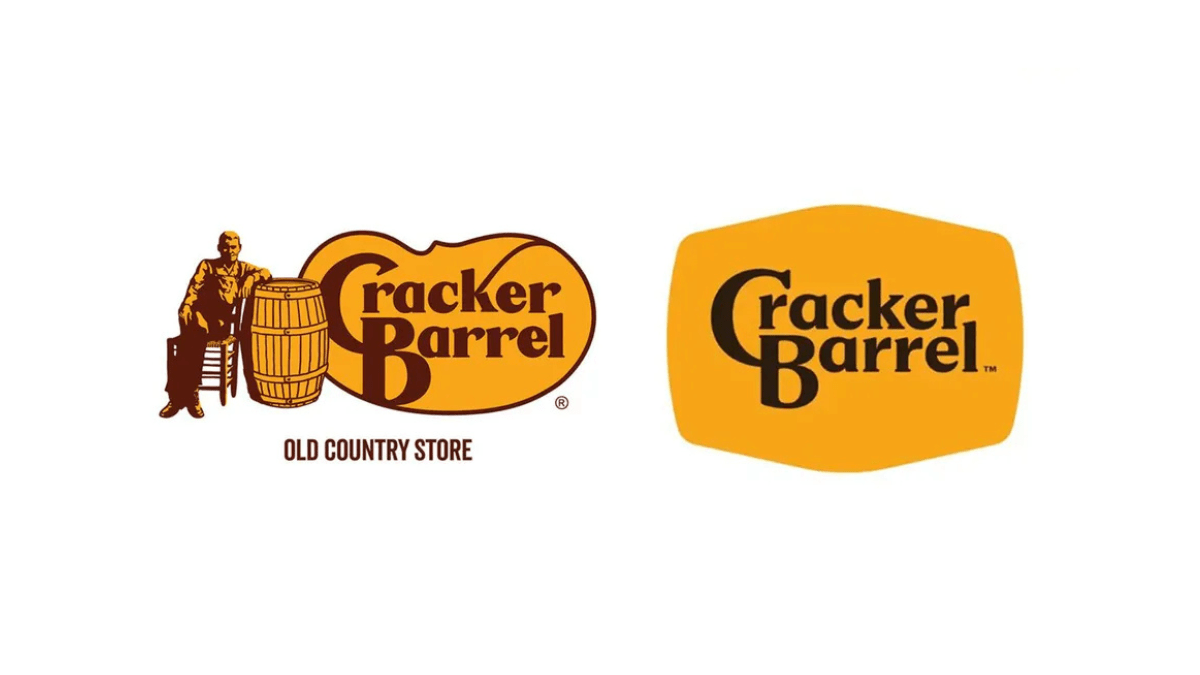
Cracker Barrel before and after images

First things first: let’s not romanticize the old Cracker Barrel logo. We can all agree that thing was crap. Overly fussy, hard to reproduce at small scale, and more nostalgia than any semblance of valuable visual communication. It screamed 1970s “down-home” branding, which is exactly when it was born. The barrel-and-guy part was never sacred. Losing him wasn’t tossing a Picasso into a garbage can, it was shedding a dated illustration that had long outlived its usefulness.

The new logo? From a purely graphic standpoint? Decidedly better. Cleaner. Contextual. Legible in digital environments. A mark you can actually scale to an app icon without losing the plot. Any competent designer will tell you it was an upgrade. And yet here we are, watching the company scramble back to Uncle Herschel after a week of torches and pitchforks from the social media mob. “REDOS WILL NOT REPLACE US.”

Here’s the thing most people—including, notably, the president—missed: the logo was just one element of a much broader brand storyboard. A great new color palette. Revised typography. Shapes that make sense, including the central-focus barrel outline. Cracker Barrel’s leadership wasn’t trying to erase “heritage.” They were trying to refresh a rickety old brand with a comprehensive strategy aimed at the next two decades or so. This included remodeled restaurants, a reworked menu, more efficient kitchens, and a retail rethink that included some pretty nifty new packaging. They wrapped it all in a central theme called “All the More.” They weren’t just drawing a new wordmark; they were attempting a strategic modernization across the board.

Cracker Barrel brand story board image

And the strategy surrounding this brand refresh was sound. Cracker Barrel’s real problem wasn’t just an outdated logo…it’s an aging customer base. Julie Felss Masino, the CEO, even said it out loud on Good Morning America: “Cracker Barrel needs to feel like the place they (their audience) want to be today, and tomorrow.” The backlash to the logo redesign, of course, is all about holding on to yesterday.

The heavy blowback wasn’t about typography or colors or shapes—it was about identity politics. For some, any change to anything in America equals “woke.” For others, evolution is just common sense. The logo became a proxy fight in America’s culture war, which is ridiculous but inevitable in 2025.

And here’s the rub: no matter what side you’re on, Cracker Barrel comes out on top. For two weeks, the entire country was talking about Cracker Barrel. Lead segments on national news programs. Graphic designers guesting on CNN. Let me repeat that: Cracker Barrel. A brand that hasn’t been relevant in a national conversation since, well, ever. As I wrote in a recent post: the conversation is the campaign. Millions of people who hadn’t thought about hashbrown casserole in years suddenly had strong opinions about a roadside chain’s logo. That’s brand oxygen you can’t buy.

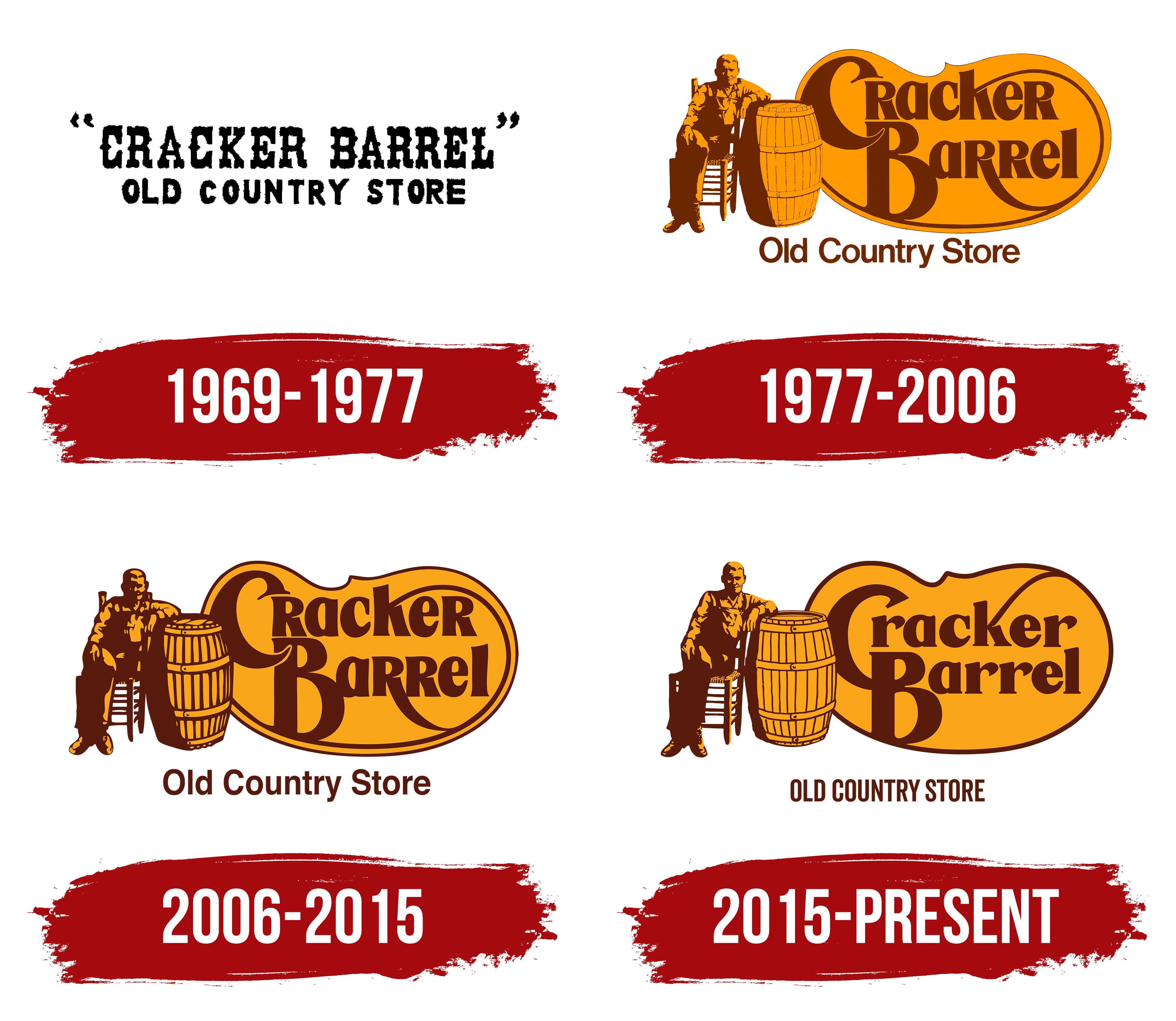
Let’s also not forget that this was not the first time the Cracker Barrel logo has been updated. It’s gone through multiple tweaks across its 50+ year history. Brands evolve their marks based on strategic direction, but also on design trends and the zeitgeist. Burger King did. Pringles did. Pepsi has done it enough times you could write a doctoral thesis on their logo alone. Logos aren’t museum pieces; they’re tools that adapt to the times, the mediums, the audiences, and the brand strategy.

Cracker Barrel logo evolution image

So, what actually is the Cracker Barrel brand? Here’s the core: folksy and casual roadside restaurants, easy to find off the interstate. They serve good, abundant food quickly, at a reasonable price, wrapped in a veneer of “Americana” hospitality. The real differentiators are iconic: the country store you pass through, the rocking chairs out front, and that peg game on every table that challenges your executive functions before your cornbread arrives. None of that has changed. The identity and experiences and memories that actually create the Cracker Barrel brand remain untouched.

So let’s get to the real lesson here. Cracker Barrel’s problem wasn’t that the new logo was good or bad or different. The problem was that the storytelling around its release got hijacked by everyone with a social media account. Everything else – the nostalgia equity, the politics, the stock prices – those were just symptoms. And because of those symptoms, they caved to the noise with a wimpy “we listened” statement just days later.

Cracker Barrel let themselves get dragged into a culture war, and they blinked. Brands should evolve. They must evolve. But evolution requires courage and clarity of communication. Without it, you wind up explaining why Uncle Herschel is back on the porch in your crappy old logo. And here’s a billion-dollar question: now that you’ve reverted back to the old logo, are you stuck with it forever? Will there EVER be a time when updating it is appropriate? 2026? 2030? As it relates to evolving in ANY way, the company has made it increasingly difficult for itself with this slippery precedent.

For the record, I think reverting to the old logo was a mistake. It ceded the narrative to the loudest voices and undercut the logic of the broader strategy. Now the 21st-century brand experience is saddled with a 1970s logo. That mismatch doesn’t just look awkward—it confuses customers. And confusion at the brand level eventually shows up where it hurts: at the cash register.

American Eagle and Sydney Sweeney: massive marketing mileage from meh advertising.

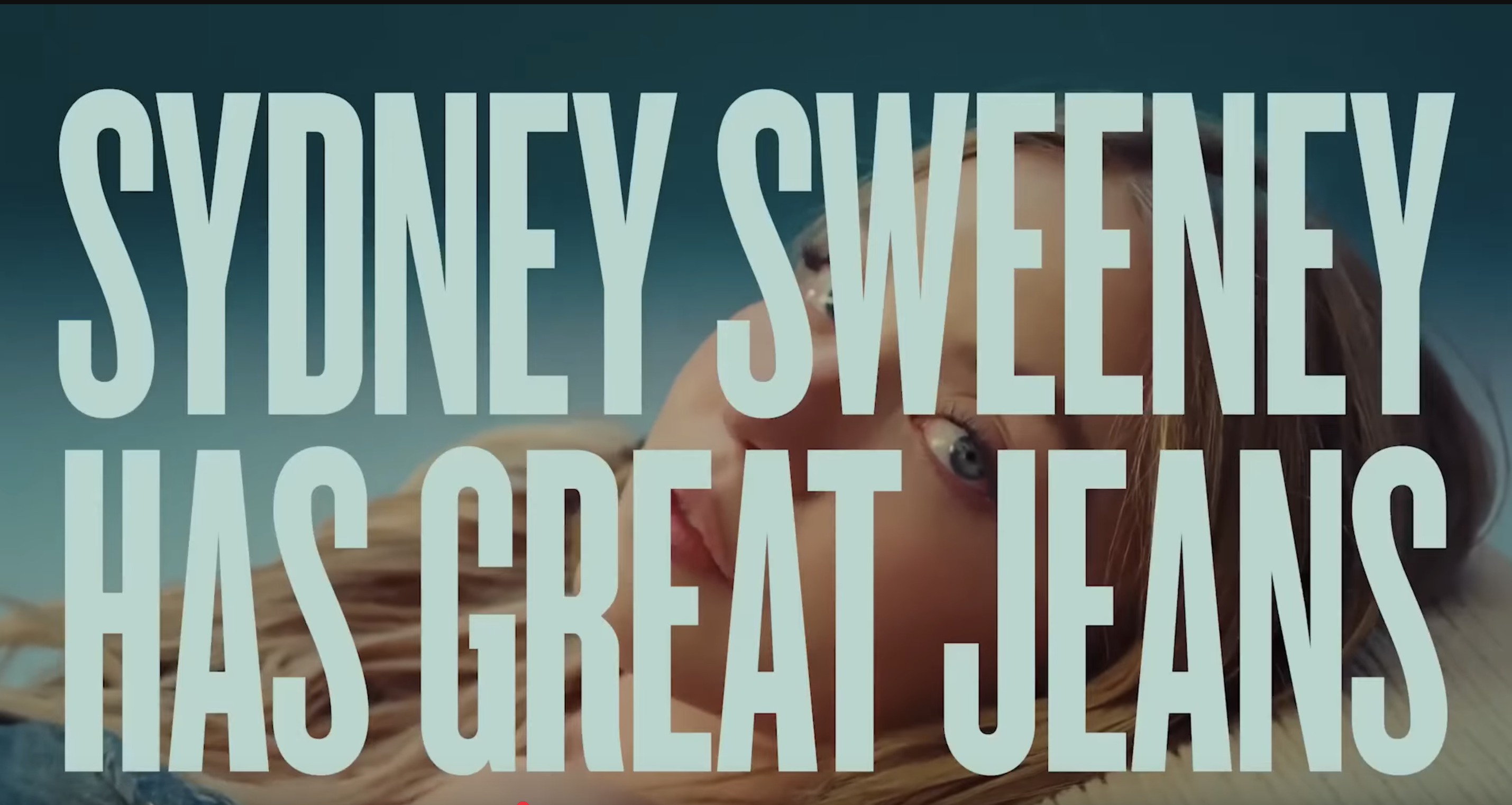
American Eagle Sidney Sweeney advertising image

A lot has been made over the recent American Eagle ads, called “great jeans,” featuring the actress Sydney Sweeney. And the question is, of course, why?

The advertising itself is pretty meh. And that’s not a knock on the creative or production teams. I just mean it’s super simple, mostly one-shots, no effects, no music bed, etc. Just stripped down actor-on-screen-reading-lines stuff. And Sweeney demonstrates no range as an actress – it’s almost a staged testimonial. The “big idea” was leveraging a pun on the word “jeans” to overtly imply “genes.” Okay, not earth-shattering, but not altogether a terrible way in.

It also affords American Eagle the opportunity to call their product line “great,” under the auspices of the pun construct. And the spots (there are at least four :30 versions, including one where she is shown auditioning for the part,) are simple showcases for her body shown in double denim. I’m much more surprised that the blowback wasn’t from the fashion police. Eeeeek!

Sweeney’s primary appeal, to put it kindly, is not in her eyes, nor in her hair (which was almost purposefully styled to look un-styled for these shoots,) nor is it her vocal fry let-me-be-sultry half-whispers. But that appeal was hardly leveraged in any of the spots. So it’s not overtly sexualized.

And any comparisons to Brooke Shields’ turn in Calvin Kleins from the early 1980’s are unwarranted. Sure, the American Eagle ads may be derivative, (attractive young woman alone, lying on the floor, talking directly to camera in and about her jeans,) but Shields was an akimbo nearly six feet tall 15-year old uttering lines that she probably didn’t fully understand to be as provocative as they were. “What comes between me and my Calvins” is far more suggestive and dangerous than a nearly-28-year old independently wealthy, 5’3” actress/producer reading a script whose impetus is a pun on the word “jeans.”

But then, there was no global public forum back in 1980 for moral critics—or heads of state—to air their grievances and/or share their hot takes. The wrong voices have taken over the conversation. And much of it is helping American Eagle get far more mileage out of this campaign than they likely would have otherwise.

In fact, were it not for social media, almost nobody would be talking about these ads, except for maybe the VIP tier of the Sydney Sweeney fan club. On one hand, you have some virtuists (not a word, but if Shakespeare can do it, so can I,) calling one of the ads “racist” and “eugenics signaling” (not kidding) because Sweeney refers to her jeans/genes being blue. (And because she’s Caucasian. And has blonde hair.) Nowhere in the script does it say anything about that making her superior or preferable. You want a script gone awry? Try on Dove’s “white is purity” debacle from 2017. Oooof.

Are there legitimate concerns that AE is showing a skinny white girl in their ads, instead of someone of color, or someone who is more representative of the average American woman in terms of size? Perhaps. According to multiple—and conflicting—sources, the average woman’s jean size is somewhere between 12 and 16. AE chose to ignore that, and opted instead to feature a size 2 or 4 Sweeney. They did it not to be exclusive, or dismissive, but to capitalize on her ascendant stardom and her significant influencer status as a social media personality with a hefty following. The ads are neither racy, nor racist. They’re just aimed at the average/likely American Eagle consumer, who happens to be young-ish and caucasian-ish, and probably identifies with or admires Sweeney in some way.

I also like that American Eagle responded to the criticism. An Instagram post from the brand reads:

“ ‘Sydney Sweeney Has Great Jeans’ is and always was about the jeans. Her jeans. Her story. We’ll continue to celebrate how everyone wears their AE jeans with confidence, their way. Great jeans look good on everyone.”

[Sidebar to all social media community and brand managers: note how the focus is more on the category (jeans) than it is on the brand (AE.)]

In many ways, the conversation has become the campaign. The advertising was just the spark that lit the fire. While that’s exciting, it’s also impossible to control…so AE ought to enjoy this, and be sure to not add any additional accelerant.

Is there a moral to this story? Is there a story in this story? I think so. But it’s far less complicated or sinister than most are making it out to be. I think American Eagle shelled out a lot of money to hire Sydney Sweeney, did some OK advertising, and has gotten tons of marketing mileage out of this, in just over a week. In our business, that’s a big win. And no matter what you do when you’re advertising, you will never please all of the people all of the time.

But remember. American Eagle is a for-profit apparel brand. And their target audience is not (and never was) “all of the people.”

Southwest is headed south.

Southwest Airlines current logo

Over the last several weeks, Southwest Airlines has made some big announcements. First, it announced that its “open seating” policy will be a thing of the past, now switching to assigned seating and offering premium seating as early as next year. The other doozy they just dropped (it tickled me to write that,) is that the airline will now be charging for baggage.

There were some less-doozy-ish announcements too, like making its fares available on aggregators like Expedia, significant changes to its loyalty program and a partnership with Icelandair.

This reminds me a lot of that whopper of a whiff (now I’m on a roll,) by Dunkin Donuts a few years back. (See post here.) Let that – and the subsequent parting of the ways with CMO Tony Wesman – be a lesson on self-inflicted marketing wounds.

Now, turning back to this mother of a misstep, (it just comes naturally to me,) let’s look at how Southwest was different from all other airlines. First, it did not have assigned seating. You just got on the plane and sat where you found one. Second, it never charged baggage fees. In fact, you could check up to TWO bags for free. They had a robust and passionate consumer base that preferred Southwest’s quirky, “we’re-not-like-the-other-guys” approach. It’s what contributed to the idea that Southwest was the airline “with heart and hospitality.”

As an aside, Southwest was quite different operationally as well. They chose to fly the same airplanes (interestingly, the Boeing 737, which includes the 737 Max 8,) across their entire fleet. This meant that their maintenance and mechanical functions could be streamlined for both speed and efficiency. By not serving other manufacturers, Southwest never had to wait for an Airbus expert, or contact a McDonnell Douglas specialist, if some kind of maintenance was needed on an airplane. That same efficiency carried over to sourcing parts, and buying in bulk…all Boeing OEM and likely the same third-party suppliers.

When you look at any marketing category, it’s sometimes hard to see which player has an advantage, or if any player has an advantage at all. That was never the case with the domestic airlines category: Southwest was BY FAR the most strategically well-positioned brand in the category. Those consumer-facing and behind-the-scenes aspects of the brand made the company interesting. And different. And almost entirely focused on keeping costs down for the consumer, which was always welcome news in a world where the price of everything seems to be going up, up, up, and fast.

As a result, Southwest pretty much beat the snot out of their rivals. Planes always full. Reviews always positive. Loyalty always very high.

Southwest Airlines former logo

Enter Elliott Investment Management. They’re some hot-shot hedge fund that likes to get press by “activist investing,” which is code for acting like a big baby after you buy a significant stake in a company. Led by Paul Singer, their founder and lead investment officer, Elliott purchased a roughly 10% share (about $2 Billion) in Southwest Airlines in June of 2024, and began to systematically trash the house. First they called a “special meeting” to openly criticize the CEO and the board of directors for not chasing profits. Then they forced resignations and retirements of key executives, installed their own CEO and half a dozen other cronies, all of whom likely devised these “policy changes,” like trying to wring up to a hundred bucks more out of every Southwest passenger on every flight.

So – if you want to know why Southwest would basically chew off its own arm when it had an established and defensible market position, it might simply be because some rich dude in Palm Beach wants to show the world how big his balance sheet is, legendary brand position be damned.

IMHO, this won’t end well for Southwest in either outcome scenario. If the company makes these radical changes, and it starts to deliver a profit in a year or two that would be acceptable to Elliott Investment Management, then I’ll eat crow AND they will have done so at the expense of a wonderfully and strategically differentiated brand. They’ll just be another commoditized domestic airline that consumers will shop based on slim price margins and/or if they service a particular destination. I think I’ve heard of them…JetBlue, right?

And what if Southwest Airlines does NOT show a profit? What if they lose more money? What if they become poach-able by some other airline that finds their routes and their operations desirable? Well then, Mr. Singer, you’ve killed a very successful company AND a very important brand for no good reason.

And that’s why I’m miffed in my mittens: either way this goes for the company, a really strong brand dies in the process.

Listen kids, work as hard as you can to make your brand different in some meaningful way.

Be different.

STAY different.

Even at the expense of some nominal basis points in potential additional profit.
Real brands with real positions are hard to come by these days.

X. Why?

This week, Elon Musk unceremoniously revealed the new brand name (and Unicode character logo, more on that later,) for what used to be Twitter. It’s simply called “X.”

And bye, bye, birdie. That most recognizable icon that adorns hundreds of thousands of websites with social connectivity, is now a part of history. And I have questions. Chief among them, of course, is why? Why take one of the world’s most popular, most recognizable, most iconic brands and just…dump it? Let’s explore.

The idea behind this seemingly rash decision is Elon Musk’s desire – and corporate directive to new CEO Linda Yaccarino – to transform the company into an all-in-one life management platform. A site for music, video, messaging, even banking and personal payments. (A super-app platform like that exists already. It’s called WeChat, and it disregards any semblance of privacy for its mainland China users. Sigh.) His contention, and I’m guessing here, is that people only see Twitter as a messaging platform, and that, in order to see it as something new and bigger, the name had to change.

But that name, and everything associated with it, had immense value. So much so that Elon Musk is reported to have paid roughly $44 billion for it. I’m no finance expert, but if you pay that much money for something, it’s because you think it has, or at least will gain, significantly more value over time. Okay, that’s a clear concept. But then you don’t change the name of that valuable thing into something banal and unrecognizable, right? RIGHT?

Twitter – whether you liked it or not, or used it or not – was a wonderfully integrated conceptual framework of idea, artwork and practical application. (And yes, I’m deliberately using the past tense here.) At the time it was developed, the idea was probably that everyone has an opinion and could chime in, er, chirp, er tweet that opinion anytime they chose. And other people could tweet. And pretty soon, everyone is all a-twitter. And so you represent that interactivity concept with a lovely little logo of a blue singing bird and it all fits together so well. A few years go by, the bird is everywhere, some big names use the platform and big things materialize, and suddenly you have a brand worth billions. And it’s represented sensibly.

Twitter – and tweeting – had become a generic term in our vernacular. So-and-so just “tweeted.” Or “re-tweeted!” There’s value there. Like when someone says “just Google it.” Or I need a “Band-Aid.” When your trademarked name becomes a verb in the English language, it likely has amassed considerable value in the process.

And speaking of value, Aisha Counts and Jesse Levine wrote in an article on Time.com, “Musk’s move wiped out anywhere between $4 billion and $20 billion in value, according to analysts and brand agencies.” This is equity that the brand took 15 years to build.

Say what you will about Elon Musk, but he has never seemed like a follower. Yet, it does seem to be a trend in the mega-tech space to dump equitable brands for less stellar superbrands. Google is now Alphabet, although Google still exists. Facebook is now Meta, although Facebook still exists. But by all accounts, Twitter is going away. It’s not clear yet if the url twitter.com will be forwarded to x.com or something similar. But there has been no indication that X is a superbrand that’s absorbing Twitter.

Let’s also remember that Musk has a thing for “X,” calling his space exploration company SpaceX. So there’s some continuity and connectivity there. (Golf clap.) But his car company is not called CarX. That would make sense. And he’s not calling this future everything-in-one app AppX. That would make sense. But I guess if people start referring to you as a genius, making sense falls low on the list of priorities.

On the logo: The symbol itself is a Unicode 3.1 character – U1D54F – which was part of a version released around 2001. In a very simplistic explanation, Unicode is a character set (designed by a group of Palo Alto techies in the early 1990’s) to be international and multilingual, mostly aimed at standardizing software coding to render text sets and symbols in various languages. Maybe it’s Musk’s tech-geek attempt at a “universal” application? Spitballing.

At first, I thought this was another IHOB PR stunt, so Musk could grab a ton of media attention to make some kind of big tentpole announcement. But when you take down the sign at the San Francisco headquarters, it probably means you’re serious. Also he took over the Twitter account @X, and there’s a kerfuffle over that, too. Man, this is a mess.

Most analysts think this is a bad idea for various reasons. I think this is a bad idea, mostly because valuable brands are so hard to come by and cultivate and grow. And people are still going to call it Twitter, and use the generic verb “tweet” for a long time. No matter what the new billionaire genius owner wants to call it.

Playing through the pause: marketing never stops.

pause_button

There was a phrase that was popular in the late 20th century that advised “no one ever got fired for buying IBM.” It was a meme that implied you were making a prudent choice in your technology partner, because IBM was so ubiquitous and so darn reliable, you couldn’t possibly go wrong if you chose to pay the extra fees and engage with such an established leader. (And talk about a GREAT branding platform for IBM!)

Here in 2020, it appears there’s a new version of that old trope as it relates to marketing. It would read “no one ever got fired for being cautious during the COVID-19 crisis.” And if you look around, all you see are brands being cautious. Brands stepping back. Brands holding on to their marketing spend. Brands putting their agencies in lockdown “until further notice.” CMOs, VPs of marketing, brand managers, and other senior executives are in full wait-and-see mode, and some of them have quickly pivoted to warmer and fuzzier messaging platforms in the short term.

If you own or represent a brand right now, it’s likely that you or someone in your organization has ordered a “pause” on some or all of your marketing activity. After all, it’s expensive to “keep the lights on” an operation that isn’t (or can’t be) visibly returning results. And you’d be more than justified for being cautious and for demonstrating prudence with your precious budget.

However, you’d also be violating one of the immutable laws of marketing. And that is to find competitive strategic advantages over the other producers in your category. Hint: now is absolutely the time to do it.

While your competition is sitting on the sidelines, you gain zero ground by sitting on the opposite sideline. Competitive marketing never stops – even when it looks like all marketing has stopped.

Irrespective of your brand category, or what position you own in the category, here are six cornerstone marketing efforts you can put to work right now (without spending tons of money) to gain an edge on your competition:

Focus on or improve your core product/service
Can you add a key ingredient, or replace a less-than-desirable one in your product formulation? If you’re a more service-oriented business, is there a new policy you can put in place that would give you an edge over your competition? (Think longer warranty period, free upgrades, adding value in new or unorthodox ways.)  Put some structure on this.  Give it language.  Give it a name.  Start talking about it.

Add new products or extend your line
If you’ve ever thought about why you’re not gaining ground on your competitors, maybe it’s because you offer limited choices. Think about adding new flavors, new varieties, or new services to your practice. Hiring a new subject matter expert into your practice is almost the same as acquiring a new company, so consider how you can go “wider” in your business, and give consumers (existing or new targets) more opportunities  – and reasons – to interact with you.

Re-evaluate or re-negotiate your distribution deals
Following on the heels of having new products or an extended line, this is a great time to read the fine print on all your contracts. Especially your distribution deals. Can you get more lineal inches in your current deal? Maybe you can reduce costs in some way, since third-party resellers are taking it on the chin right now. They’d be hard-pressed to avoid losing your business, so take advantage of the opportunities while you can. It’s also a great time to hear proposals from new distributors or brokers or affiliates who are also innovating to stay relevant.

Do some research/learn more about what consumers really want (or who your consumers will actually be)
It’s very likely that consumer behavior will be altered in many ways as we either return to normalcy or forge whatever the “new normal” will look like. This is the crucible of competition – find out why consumers may have chosen a competitor over your brand, and see if you can accommodate their desires. Is it price? Is it a personal touch? Is it the ingredients? Is it your location? You’ll never know if you don’t ask, and paying people for their opinion right now makes you look magnanimous as well as appealingly curious.

Think about a new approach to your advertising
We’ve seen many brands pivot to a more “we’re with you” approach in the last several weeks, and it’s likely we’ll see even more message morphs in the coming months. But maybe it’s time for a new thousand-foot strategy. Maybe it’s time for a new tone. Or a new face. Or something classic and familiar. The point is to zig when the rest of your competitive set is zagging (or lagging. Or sagging.  Or gagging.  This is fun.) At the very least, you’ll get more attention, and that’s always a good thing.

Develop at least three strategic marketing plans for your brand
It must be said that no marketing strategist is ever right 100% of the time. So make contingency plans. The marketplace will be different, so make sure you have plans to address whatever those differences might be. For instance, it’s possible one or more of your competitors may fold. So have a talk with your bank (or investor group) and be ready to acquire at a favorable cost (if that makes sense,) or to at least swoop in and grab the lion’s share of that brand’s customer base. It may not be so rosy, so consider what some worse-case scenarios might look like, and script responses to those as well. With so many unknown variables, you can keep your team focused and motivated by creating pre-coordinated plans and putting them in place for virtually any outcome.

Stay in touch with all stakeholders
Speaking of all of this, it’s a great time to have renewed and refreshed conversations with all your stakeholders. Let them know that you’re thinking ahead, and thinking positively. Let them know that they may be called on to think outside the boxes of convention. And most importantly, let them know that they will play a role in kicking the competition in the teeth, and getting ahead when all this uncertainty is behind.