Super Bowl 60 Grins and Groans

Congratulations to the Seattle Seahawks on their dominating performance over the New England Patriots. And a special shout-out to Charlie Puth for a stunning performance of the national anthem. Wow! If only the advertising could reach such heights.

THEMES
While stuffing your ads full of celebrities is always a Super Bowl theme, this year didn’t deviate from that path. It was a bit much, and in most cases, did not really serve the spots very well.

AI seems to have pushed out automobile advertising. I counted six (seven if you count the Alexa offering with Chris Hemsworth?) spots that featured AI in some way, including ChatGPT’s nod to developers, and some new entrants to help with every day tasks, like creating apps.

Retro also showed up to the party, with Instacart taking the absolute cake with Ben Stiller and Benson Boone and their over-the-top competition for the spotlight. Very funny. Dunkin’ tried their hand at it, too, with less success, and Xfinity inserted themselves into the original Jurassic Park with a well-managed proposition that their services would have “just worked” and avoided some pretty big mishaps. Plus Coinbase rocked a retro-looking karaoke spot for…well, that’s unclear. More on that later.

Speaking of unclear, vagueness unfortunately turned out to be a theme too. A movie promo for Netflix that never mentioned the title. The Coinbase spot, just listing irrelevant lyrics, and poor Poppi soda, talking about “vibes” instead of probiotics.

Also, the Backstreet Boys was kind of a theme this year too (?) I’ll just leave that there. And did I mention that there were talking – make that SINGING – clumps of hair on bathroom floors and in shower drains? Ooof. Makes you miss the good old days of puppy-monkey-babies, doesn’t it?

HONORABLE MENTIONS:
Budweiser returned to form with a coming-of-age story of a Clydesdale foal and a clumsy eagle chick that both grow up to become symbols of Americana. They generally don’t miss the mark with these life-on-a-farm vignettes, and this year was no exception.

Google Gemini let us in on a quiet conversation between mother and child while looking for a new home, and using Gemini to visualize the space in new ways. Their banter is sweet and sensitive. And the platform shines because it’s proven right before your eyes. For years, Google has always managed to humanize their services (even paid search) with a deft and elegant touch. Well done.

HIMS and HERS probably made the most significant statement of the night, starting out by saying “rich people live longer.” And then doubling down with the line “the wealth gap is a health gap.” Then they hit it out of the park when they wrap the idea that personalized science is in reach for everyone, punctuated with the line, “Now that’s rich.” Wow – now THAT’S a statement, and a great way to get 99% of the country to at least pay attention. Gutsy move, and I think it paid off handsomely.

GRINS:
The best ads of the night all have something in common, which is that they take a simple concept (which is usually a basic, un-exciting value proposition) and inject it with drama in some way to make that boring-ish platform an exciting new way to understand the brand. All of these did that very well this year. Here are my top three:

Apartments.com/Homes.com starts with their basic selling proposition: “with millions of listings on our platforms, you’re going to find virtually any place you can live.” Then, they set up the way in to the concept: it would be easier to just find the places you CAN’T live. Then, hilarity ensues when they dramatize those “you can’t live here” locations: a tarmac at a busy international airport, a de-commissioned Soviet space station, the Mariana Trench, and so on. There’s a clear path here to successful advertising, which is to dramatize the benefit, or in this case, dramatize the opposite. Strong work here for sure.

Grubhub
Sometimes, the best ideas are the simplest ones. And no brand demonstrated that better than Grubhub. They took a bland boardroom idea about not passing on delivery fees to consumers and turned it into an elegant, funny, villainize-the-fees sendup. The brand joins us as partners against a common and bothersome enemy. (Smart.) It doesn’t hurt when George Clooney sits at the head of the table and says “we’ll eat the fees.” The reason I love this spot so much is for its SINGULARITY. One idea, clearly articulated, then exceptionally well-executed.  A winner in my book.

State Farm wins the night with their Super Bowl spot, spoofing “halfway there” insurance with Danny McBride and Keegan-Michael Key clearly explaining that you’d be “livin’ on a prayer” with their insurance to Hailee Steinfeld. The spot was great, but so were all the ancillary teasers that they did both online and on sneaky TV buys leading up to the game. Of course, a Jon Bon Jovi cameo at the end doesn’t hurt and Steinfeld seals the deal when she turns to a State Farm billboard and simply utters “I should have gone with State Farm.” Fun, over the top, deliciously comedic performances, (I’d love to see the outtakes for this) and a clear and simple proposition. They drive off into the sunset (that’s the victory) and the State Farm Guy says “stop livin’ on a prayer and get State Farm.” This is big-league-level Super Bowl advertising, well-executed, well-acted and well-delivered.

GROANS
Now, if taking your core value and dramatizing it in some way is a smart path for successful Super Bowl advertising, then the opposite is true when you either a.) don’t state your value proposition very clearly or b.) don’t explain why there’s value in choosing you. A lot of spots fell flat in this regard, including these.

Ritz crackers had the basic punch list of a Super Bowl spot: get a bunch of celebrities. Check. Put them on a beach and have a party. Check. But then…what? We’re “salty” and don’t want to go to the party? Sure, Jon Hamm delivers a couple of brand points when he says “they do have Ritz crackers, though…that salty buttery flavor…” And…that’s it. Oh, and then Scarlett Johansson shows up on a jet ski. Bowen Yang is almost always funny, but the script here just made him an unclear, even unlikable character. The problem here is that Ritz do not come out as the hero, nor do the characters turn out as the heroes once they decide to join the party. It’s like they positioned Ritz for “other people,” which is the exact opposite of a brand directive, don’t you think?

I don’t even know what Squarespace was trying to accomplish with their commercial. The ad seems to focus on the main character not being able to secure a vanity URL, and then being frustrated by that. (Also, why does she live in a castle on a remote island?) But that’s not the Squarespace proposition anyway. I didn’t understand this at all. Someone just got enamored of the idea of having Emma Stone and director Yorgos Lanthimos do their spot and then seemed to forget what people know and understand Squarespace to be. (A template-based website building platform.) Now…if the ad was designed to show that Squarespace now offers domain registrations, (do they do that now?) this was also the exact OPPOSITE way to describe that. (She can’t secure emmastone.com throughout the spot and smashes laptops in frustration.) Basically, Squarespace dropped like $10 million to do a very nice commercial plug for GoDaddy. Head-scratcher for sure. Side note: director Lanthimos also did the Grubhub “Feest” spot.

Coinbase
Sure. Everybody wants to steal some headlines for doing something downscale, and maybe even outrageous. Remember the floating QR code or Crowdstrike’s “western” theme in the  last couple of years? This was just weird. I’m not sure how “rock your body” lyrics relate to a cryptocurrency platform. Are you? Please explain it to me. Note to future Super Bowl advertisers: show this first in your strategy meetings and then explain to everyone, “we’re NOT doing this.”

So…what was your favorite? I’d love to hear.

The reports of the cookie’s death have been grossly exaggerated.

“The death of cookies,” to borrow a phrase, is (mostly) fake news. I wouldn’t be concerned with this topic, except that so many reputable media outlets have been publishing misleading and sensational headlines about it.

Take a look:

Adweek sent an email special report with the headline:  “The Death of Cookies.”

AdAge with Cheetah Digital posted on social with the same frenzied phrase: “The death of cookies”

And Segment (Twilio’s customer data platform) went even further with this social gem: “Digital Advertising in a Cookieless World.”

But here’s the problem: It.  Isn’t. True.

So let’s get to the bottom of why all these authorities are spewing all this gunk.

The first thing that’s important to know is that there are two primary kinds of cookies:  these are called “first-party cookies” and “third-party cookies.”  (I know, it’s weird that there’s no “second party cookies.” Somebody got ripped off in this deal.)

First-party cookies are data files that are shared between your browser and any website you visit.  When you visit a site, especially a site that you may go back to multiple times, say a news site like NYTimes.com, a small text file is generated and stored on your browser. It contains information about you (nothing too personal, unless you choose to save passwords via your browser, and please don’t do that,) like the browser you’re using, the operating system, where you’re located (via your IP address,) and even the browsing history.  They were originally created to optimize the performance of websites.  Since there’s a history encoded in the cookie, the website does not have to fully reload each time you visit it – it sort of restores the previous session, and then updates the site with its latest content. This is why your shopping cart on e-commerce sites is “remembered” and preferences on other sites are stored.  Each time you go back to the site, the cookie is updated with more information.  So it’s a bit of a history log between your browser and a specific domain. 

Disclaimer: This is an oversimplification of first-party cookies, but it will serve to help distinguish it from the other type.

Third-party cookies are different in many ways. First, and most important, they are stored under a different domain than the one you are visiting. They are typically “shared” from the domain you’re visiting with – you guessed it – third parties. The most basic example is this:  you go and visit NYTimes.com to read the news, and you see banner ads on the top and along the right side from a brand like Toyota. Since NYTimes is a publisher, and has sold advertising space to Toyota, they may have also agreed to share your data, and allow Toyota to drop a third-party cookie to track your browsing behavior.  The thinking with this was “it would help Toyota to know what other kinds of sites readers of the New York Times might visit, and what their browsing behavior is, so we can build a better profile of potential targets.” 

Disclaimer:  this is also an oversimplification of third-party cookies, but it should serve to help distinguish it from the other type.

Okay.

So, the headlines you’ve been reading are misleading, because they leave out a very important qualifier: the only thing that’s “dying” is the third-party cookie.

Pushing out headlines like “the death of cookies” or “a cookieless world” is like saying “music is dead” just because we’ve banned Justin Bieber. It’s sensationalizing the story at best. It’s clickbait at worst.

First-party cookies are here to stay, and there’s no way they’re going away, since it would cut off hundreds of billions of dollars in revenue being transacted every year. First-party cookies form the basis of ad targeting, retargeting, (yes, you can still be retargeted via first-party cookies,) display advertising (banner ads,) most social media platform algorithms, and the mighty Zeus of them all, search engine marketing and its associated retargeting.

[The post ends there, but I have a few words to say about WHY third-party cookies are getting the axe.]

The whole kerfuffle over third-party cookies is generally about privacy, and not having one’s data shared without one’s knowledge. But who are we kidding? Our data is getting shared every day, all over the place, whether we a.) like it or not and b.) know it or not.  Did you ever Google yourself? I’m sure you didn’t actively and purposefully put all that information there – it was aggregated from across the web without your knowledge or consent. How do you think data marketing companies make money? They go and mine data they already have, or it’s getting shared with them from retailers, credit card companies, and others. Yes, GDPR legislation has been adopted, but all it effectively does is add another annoying click before I get to the content I want on any new website. Ugh. And if the last year has showed us anything, (since third-party cookies have started phasing out and Apple’s iOS tracking regulations have been adopted,) it’s that you can still run effective and even mobile-friendly ads without third-party cookies and nobody is any worse for wear.

This author’s preference is to have his data shared (no social security numbers, credit card numbers or bank account numbers, thank you very much,) so that my general Internet experience is more carefully curated and more fully tailored to my preferences. Killing third-party cookies was accelerated as a knee-jerk reaction to the 2020 election and fears of the “echo chamber” effect, and more sensitive issues like child welfare, gender identity, and other possibly incriminating privacy gaffes. All the while, forgetting that you can still be retargeted via first-party cookies. They could have worked that stuff out and still made the Internet an interesting and contextualized place.

If Toyota wants to follow me around for two weeks to find out that I’m not a fit for their brand, so be it.  At least I won’t see ads for the 2022 Camry hybrid anymore.

Pokemon GO reveals 5 important marketing truths you can’t underestimate

pokemon_GO

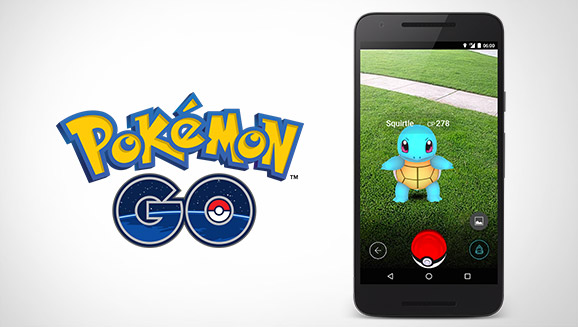
Unless you’ve been living on another planet for the last several weeks, you’ve no doubt heard of the Pokemon GO craze that’s sweeping the globe. 50+ million downloads later, and people are still out walking the streets, through parks and even into closed spaces like stores and stations to throw a virtual PokeBall at virtual fictitious creatures.

It’s a powerful shift in the gaming world, and integrates many tech categories, including mobile, AR, GPS, and more.

But beyond the tech itself, what’s most interesting are the marketing implications. (What would a good fad be without in-app purchases, right?) And the Pokemon GO craze reveals some deep-seated marketing truths that should not be underestimated.

Never underestimate the power of brand bonds.
While Pokemon GO is a 2016 phenomenon, its roots go back more than 20 years, to the Pokemon game developed for the original GameBoy console by Nintendo. This collecting game centered around fictional creatures called Pokemon, and was a huge hit, eventually spinning off six generations of gaming updates and more than 700 “species” of Pokemon.

The original games captured the attention of young children and tweens prior to 2000 – the group we now fondly call millennials – and those children lived and breathed the games, the anime series and feature films. There’s a complete mythology that children became immersed in, memorized, and fantasized about as a result of all the media pushed out around the brand (not unlike some other franchises you may have heard of, like Star Wars or Harry Potter.) It’s no surprise, then, that when the brand resurfaces decades later with a new iteration, that the barriers to entry are virtually non-existent, and the familiar faces (who can resist a Pikachu?) bring back deeply embedded fond memories and feelings of a bygone youth.

Never underestimate the power of new technology
The tech involved with bringing Pokemon GO to market is pretty hefty, especially in its integration of several complex technologies into one robust platform. There’s a gaming component, of course – objectives, scoring, playing against others, battles in PokeGyms and reloads at PokeStops. There’s full mobile integration (iOS and Android compatible,) with GPS into a hyper-animated GoogleMaps application. And central to its appeal is the AR (augmented reality) built into the experience, that “hides” Pokemon into your normal environment when viewed through your device’s camera. Oh, and a wearable device for playing the game (line extension anyone?) is set to be released in September of 2016.

It should be noted that tech is at the heart of this whole thing, and that Niantic, the company who developed Pokemon GO, was at one time an internal Google startup that spun off (with $30 million in pledged investments) back in October of 2015, right around the time Google restructured as Alphabet.

Never underestimate the power of fads
It’s hard to resist the appeal of seeing scads of young people laughing, working together, laughing, running around the streets, laughing and having tons of fun. Did I mention laughing? Fads capture attention, typically of a specific group, and gain popularity due to their exciting or enticing nature. That is happening here on a grand – indeed a global – scale, and a great many participants have the Pokemon history to fall back on. To be noted, the Pokemon universe is rolling up new fans as a result of Pokemon GO’s popularity as well. Also of note is that fads typically don’t last – some turn into trends, and I suspect that we’ll see that in this case, because of the copycat phenomenon…see below.

Never underestimate the copycat syndrome
How many brands right now do you think are huddled in their war rooms, feverishly discussing the Pokemon GO craze and asking the inevitable question “how can OUR BRAND do something like this?” Naturally, when a craze sweeps the nation (and in this case, the developed world,) competitors and non-competitors alike recognize the opportunities and rush to develop their own versions to grab attention and attempt to capitalize on the appeal.

Once it becomes viable that there’s a WILLINGNESS on the part of millions of people to participate in a specific type of activity or behavior, brands rush in with their own versions. Expect to see at least a dozen new AR-oriented applications, games, and extensions within 6-18 months. Some may find traction (if they can bring their own appeal to the engagement,) but most will typically fail – either because the appeal will fall on deaf ears, or because the offering won’t be actually cool, or because it will become too overtly commercialized.

Never underestimate the power of community
One of the most critical elements of the Pokemon GO craze (and it was likely unintended,) is that it brings people together. You see groups of 2, 3, 4 or more people walking around with their phones and working together to find new Pokemon. They’re young, they’re laughing, and it looks like they’re having a great time. (Seriously, who wouldn’t want to be involved with that?)

This part of the phenomenon speaks to a deeper truth about consumers and brand adoption behaviors – we’re far more likely to adopt a brand if we think we can be affirmed or liked in some way as a result – especially by our peers. Pokemon GO has done that in a unique way: with the backdrop of a well-established brand familiarity, with the integration of emerging technologies and through the power and comfort of a large peer community.

So…if you’re one of those brands who are considering launching your own version of Pokemon GO, don’t underestimate these important elements. And more importantly, don’t OVERestimate the appeal of your brand to extend into this realm. If you’re gonna do it, do it right, and do it in context with what your consumers really want. After all, you gotta catch ‘em all!


The Curious Case of Apple and the FBI

apple_magnify

There’s a lot of talk going on right now in Silicon Valley about this case the FBI and Apple are grappling over: it’s an attempt to unlock the iPhone 5C of Syed Farook, the Pakistani-born terrorist who, along with his wife, killed 14 people in San Bernardino, California.

At the heart of the case is a request by the FBI, now filed into a court order, to impose upon Apple Computer to help the FBI unlock this device. As you know, iPhones can be locked with a numeric code, and after numerous attempts to unlock the device with the WRONG code, the software has a built-in “erase all” function. This is built into iOS, and it’s a protective device. The FBI is specifically requesting Apple to write NEW software that will override the built-in protections of iOS, so that the FBI can try 10 or 20 million different passcodes without erasing the contents of the device.

The first issue, of course, is how the FBI can’t figure out how to get into this device. You could probably throw a rock in Silicon Valley and find a dozen entry-level hackers that could circumvent the passcode to get into the device. How does the FBI not have 10 of these people on staff already?

Sure, the nature of this attack was awful, and would get even your garden-variety patriot up in arms about getting to the bottom of the crime, and especially finding out if anyone else was involved. It makes perfect sense, from an investigational perspective, to see what information that phone has on it.

However, I’m not sure that’s Apple’s responsibility. And as the Tim Cook-penned response indicated, it does set a dangerous precedent about privacy and the reach of government. He wrote:

“Opposing this order is not something we take lightly. We feel we must speak up in the face of what we see as an overreach by the U.S. government.

We are challenging the FBI’s demands with the deepest respect for American democracy and a love of our country. We believe it would be in the best interest of everyone to step back and consider the implications.”

But more than all that lofty ideology, this seems like a pretty cut-and-dry case of “it’s not our problem.”

In some sense, I think the FBI is confusing Apple with other tech giants like Google or Facebook. These companies DO have oodles of information about their users – usernames, passwords, location history and much more. But this is not the business Apple is in. Not by a long shot. They make their money on selling devices.

And that’s where I think this discussion hinges. All Apple did was sell a device to a consumer. What that consumer subsequently did with it is his business. Now, if that device was used in a horrible crime, (and that’s not a fact, but rather only an angle being pursued,) it certainly makes sense to see what information is on there. But how that is Apple’s responsibility seems, at the very least, confusing – if not downright dangerous.

From a brand perspective – this is a high-stakes game for Apple. If they capitulate (or are forced to,) then the risk of floodgates opening becomes a likely outcome – expect every country around the world (especially high-iPhone-penetrated countries like China and India,) to issue similar orders to the company.  And then expect similar orders to flood the executive offices of every technology company, social media company, e-commerce company and so on.

If Apple holds firm here, they could come off looking like heroes of privacy and vicars for establishing the boundaries between technology and civics. But at what cost? Is there a public backlash against the brand for “not cooperating in the war on terror?” Or is there a sentiment for honoring our rights to privacy that Apple would have stood steadfast to uphold?

This is dicey, indeed. And if I’m a brand manager for Apple, I would be constructing about 17 different contingency plans. Let’s stay tuned.